AI, Email, And The Human Connection

Plenty of people will tell you that “email is dead” and that AI is about to replace careful, considered marketing. The reality emerging from practitioners on the ground is very different. Email is still the backbone of serious business communication – and AI, when used well, is becoming the power tool that makes it more strategic, more personal and more effective.

"One of the dangers of AI is it takes email purely transactional, and I think that we miss an opportunity here. I think AI will help serve us connect with humans better by helping us to create better messages, but it all comes down to the human connection for me." Jonathan Sherwin.
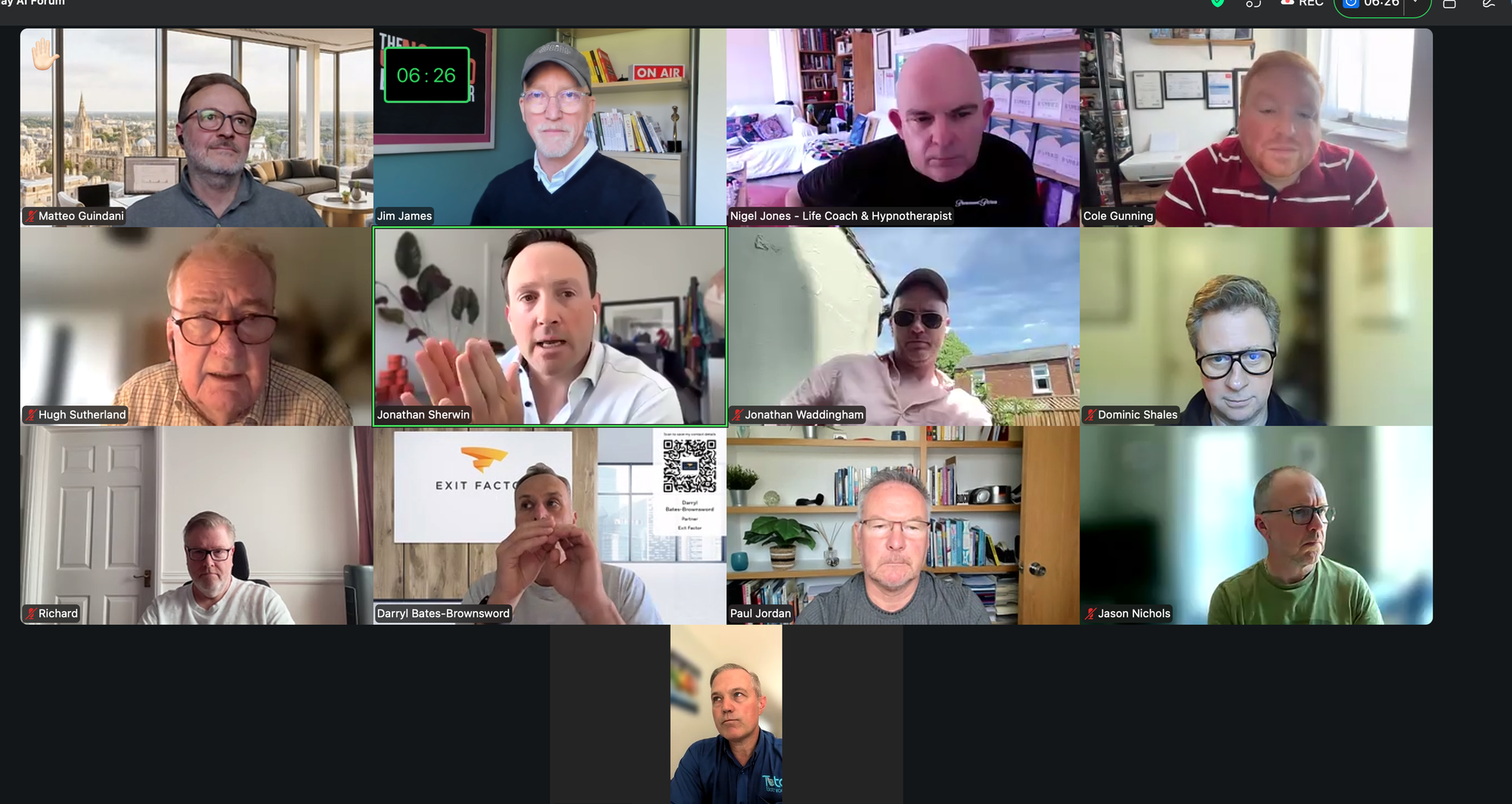
In today's session of the TUNE Into AI, we invited email and communications specialist Jonathan Sherwin to share how his agency is using AI around email marketing. Jonathan runs Bath Comms, a family business that has evolved over nearly three decades from web design into development, e‑commerce and now a strong specialism in email.
Across all those iterations, one thread kept showing up: email is the channel where money and messaging reliably meet. Order confirmations, onboarding, renewals, promotions, education – email quietly carries the weight.
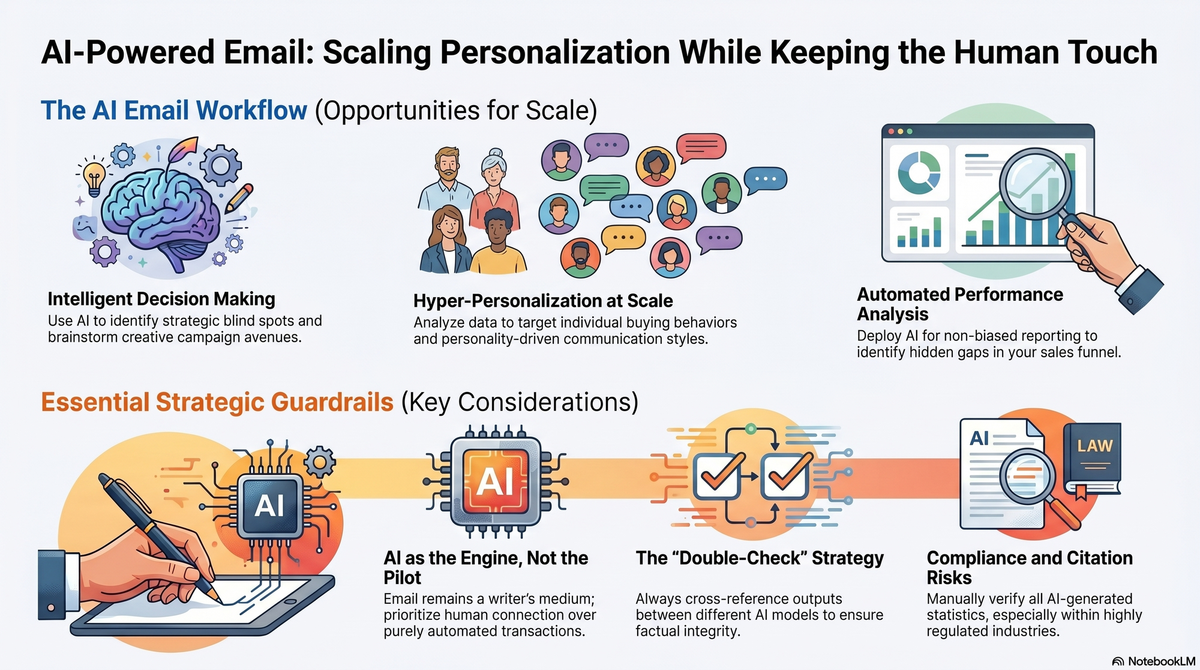
Jonathan’s starting point is simple but important: email is still a writer’s medium and a human relationship channel. AI should enhance that, not erase it. He broke down three key areas where AI is genuinely useful in email: decision‑making, personalisation and reporting.
First, AI as a strategic thinking partner
Good email doesn’t start with a template; it starts with decisions. What is the objective of this campaign? Who are we talking to? Where are they in the journey? What do they need to hear next? Traditionally, that was a whiteboard session with people in a room.
That human work is still essential, but Jonathan now brings AI into the process early. Before opening Mailchimp, Klaviyo or any ESP, his team will brief a tool like ChatGPT or Claude with client context, past performance and campaign goals, and ask it to:
– Suggest angles, hooks and offers they might have missed
– Challenge assumptions about audience and messaging
– Propose alternative sequencing or follow‑up paths
The point is not that the model “knows best,” but that it surfaces options and blind spots the team might not see. Instead of recycling the last campaign with new dates, they start from a richer, more tested strategy.
Second, using AI to move from broadcast to “one‑to‑one at scale”
Most businesses still treat email as broadcast: one message to thousands of people, with perhaps a simple split between buyers and non‑buyers. That’s better than nothing, but it ignores huge differences in how people think, decide and respond.
Jonathan’s view is that the real opportunity with AI is to move towards “one‑to‑one at scale.” The goal is for each subscriber to feel the message was written for them, even though it was generated and delivered at scale.
"Email is still, in my opinion, a writer's medium... AI still [I] see in this role as an engine to help you communicate personally really well, yeah, it's still for writers first, and it's still this is still a personal channel."
AI helps here in two ways:
– Smarter segmentation: analysing behaviour, purchase history, engagement trends and more to build micro‑segments that reflect how people actually act, not how we hope they act.
– Adaptive messaging: varying tone, depth, structure and emphasis so that different people get the same core message in a style that suits them.
He used personality frameworks as a useful analogy. Some people want short, direct, outcome‑focused emails. Others want context, story and detail before they act. Historically, you would need a large comms team to manage that kind of nuance. Now, with AI analysing data and generating variants, one team can serve a wide spectrum of preferences far more effectively.
In practice, that often means exporting data out of the email platform, working on it in tools like ChatGPT or Claude, and then bringing refined segments and copy back into platforms such as Mailchimp or Klaviyo. Some ESPs are starting to integrate AI directly – Klaviyo, for example, can plug into external models through its own integration layer – but human judgement remains central. AI is the engine; people still drive.
Third, AI in reporting and analysis
The final area Jonathan highlighted is reporting. Traditional reporting is labour‑intensive: download campaign stats, cross‑reference with analytics, compare to previous sends, and then write up findings.
AI changes that by being able to ingest multiple data sources and look for patterns that don’t fit your neat funnel diagram. For example, it can help you spot:
– Segments that never attend your webinars but consistently engage with replays
– Subscribers who are being emailed too much and starting to disengage
– Audiences who don’t fit your defined stages but are still showing strong buying signals
Because models are not attached to your existing mental model of “the funnel,” they often surface opportunities – or risks – that might otherwise be missed. The human role then is to interrogate those findings, validate them, and decide what to change.
Real‑world constraints: compliance and credibility
The discussion after Jonathan’s talk was a useful grounding in reality. One of the most important contributions came from a financial adviser in the group, who works in a highly regulated environment.
His concern is one that will resonate with many professions: if you let AI generate content that includes numbers, projections or regulated claims, you are still responsible for every word.
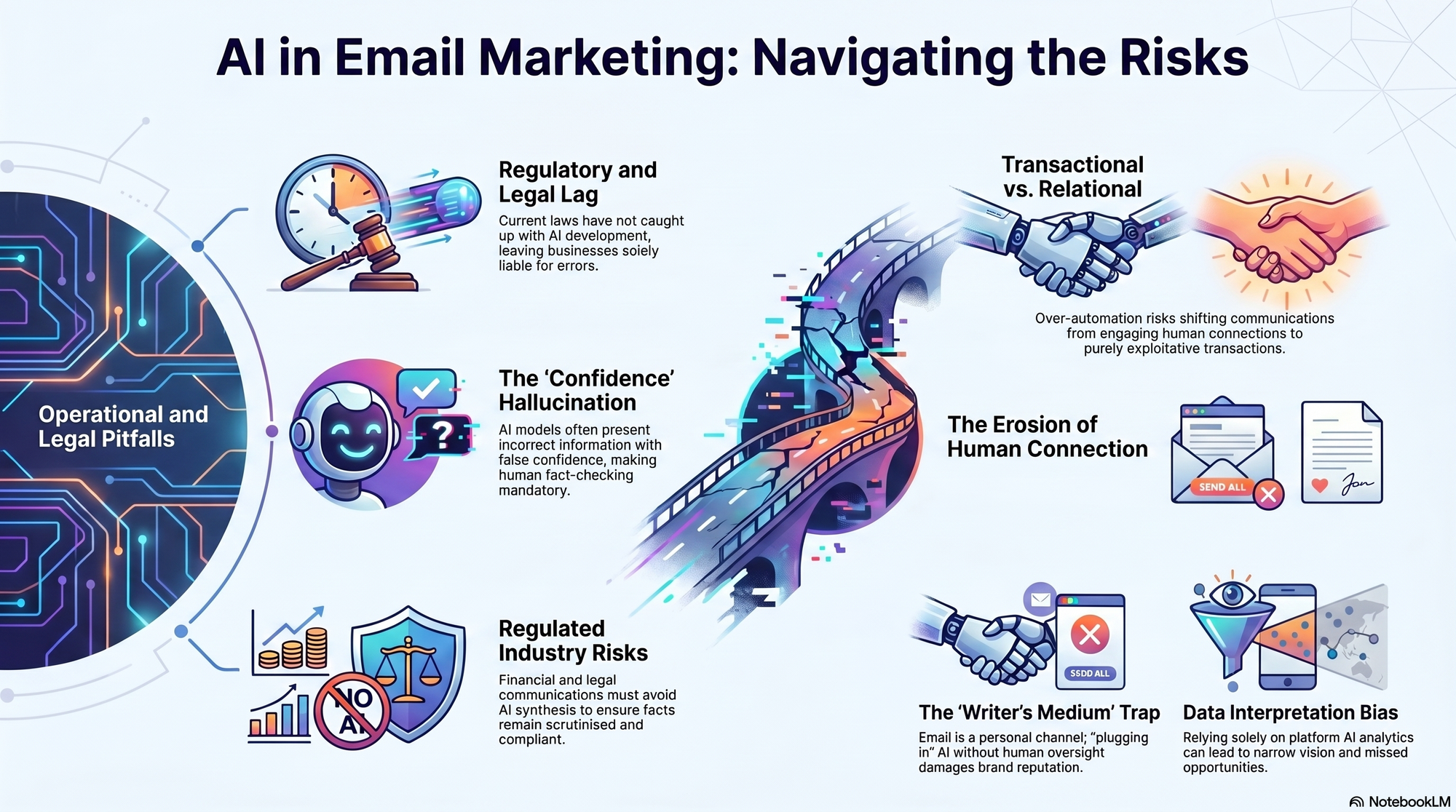
The consensus in the group, and Jonathan’s advice, was clear:
– Use AI to help you summarise, structure and clarify, not to invent facts.
– Anchor any sensitive or regulated statements to verifiable external sources.
– Make it explicit where content has been AI‑assisted, and always apply human review.
– When in doubt, keep AI behind the scenes (research, drafting, outlining) and let the final, public wording be under your full control.
Several of us also recommend cross‑checking important content between models. If one model drafts the email, ask another to fact‑check and critique it. That extra layer catches a surprising number of errors and over‑confident statements.
Practical patterns emerging
Beyond theory, people in the session shared how they are already using AI around newsletters and email:
– Creating custom “newsletter writer” assistants, trained on their preferred structure and tone, to generate first drafts quickly.
– Using automation tools to pull article links from RSS feeds, send them to AI for summarising and commentary, generate images and then publish across email, websites and LinkedIn.
– Testing the basic predictive segmentation tools now appearing in ESPs, while still relying on their own analysis for important decisions.
What all of these have in common is not blind faith in automation, but a focus on saving time and improving quality while keeping control.
The real opportunity
The practical takeaway from Jonathan’s session is that AI plus email is not about volume; it is about relevance. AI can help you think more broadly at the planning stage, talk more personally at the sending stage and see more clearly at the reporting stage. But email itself is still a personal, writer‑led, relationship channel.
The risk is that we use AI to send more generic noise faster. The opportunity is to use it as a team of tireless assistants so that we can spend more of our time on strategy, judgement and genuine human connection.
That choice is not made by the tools. It is made by us.
If you're interested to join the TUNE Into AI forum then contact me.