LinkedIn Cheat Code.
Sneaky content” means letting others do the experimentation: you study their top posts and reuse the underlying pattern rather than inventing from scratch.

A strong personal brand on LinkedIn is no longer a “nice to have” reserved for influencers; it’s a practical growth tool for anyone who wants better opportunities, more inbound leads, and a clearer voice in their industry.
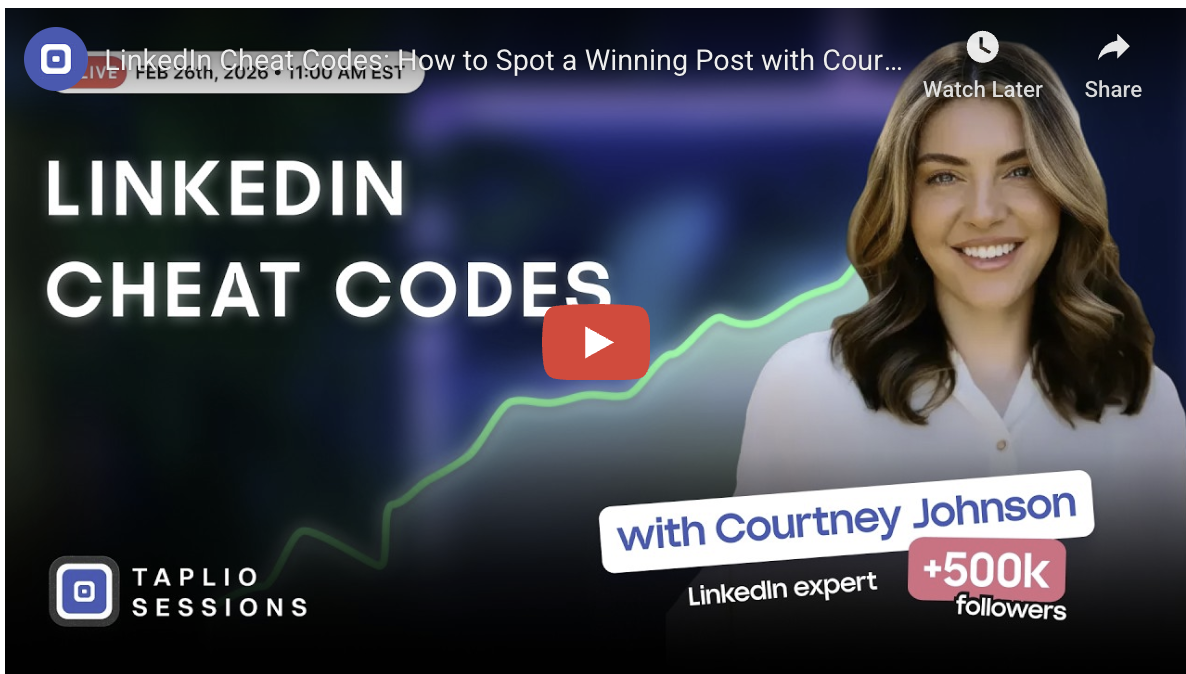
In this post, taken from a Tapilo webinar with personal brand expert Courtney Johnson we’ll break down a simple, repeatable system for creating high‑performing LinkedIn content using pattern recognition and “sneaky” research—so you can stop guessing what to post and start publishing with confidence.
Core idea
High performers on LinkedIn do not guess what to post; they systematically study viral posts, extract patterns (hooks, formats, topics, language), and recreate those patterns in their own voice and niche, then double down on what works.[^1]
Key principles
- Posting isn’t about credentials or talent; it’s about teaching people “two rungs below you” using what you already know and have experienced.[^1]
- LinkedIn rewards structure and consistency more than random luck or inspiration; there are repeatable formulas behind high‑performing content.[^1]
- The two “games” are consistency (publishing regularly, even imperfectly) and optimization (analyzing data and improving once you have enough posts).[^1]
“Sneaky content” and research
- “Sneaky content” means letting others do the experimentation: you study their top posts and reuse the underlying pattern rather than inventing from scratch.[^1]
- The Taplio Viral Content tab is used to:
- Filter viral posts by topic, industry, or metric (likes, comments, followers).
- Save strong posts to an inspiration collection.
- Inspect hooks, structures, and themes that consistently outperform.[^1]
- You can also run free mentorship or audience calls to hear exact phrases your audience uses about their problems, then mirror that language in posts.[^1]
Anatomy of a high‑performing LinkedIn post
The speaker breaks down a repeatable structure:[^1]
- Pattern‑breaking hook
- Short, punchy, usually not longer than the first line before the line break.
- Can be a story, personal anecdote, contrarian opinion, or big number pattern (e.g., “I get 100 messages a week. 99% are bad.”).[^1]
- Hooks that include large numbers plus “here’s what the top X% do differently” are highlighted as easy templates.[^1]
- Relatable tension or problem
- Clearly name a problem your audience is already feeling (overwhelm, confusion, stagnation).
- Best source is direct conversations: ask people where they’re struggling and reuse their words.[^1]
- Story or insight
- Share from the “scar, not the wound”: tell stories you’ve processed already, not live drama or trauma dumping.
- Reflect on what you learned rather than just venting.[^1]
- Concrete takeaway
- One clear lesson or principle (e.g., “Visibility is your perceived value”).[^1]
- Engagement trigger
- End with a question, request for feedback, or a “choose one of two options” prompt to spark comments.[^1]
Using audience language
- Collect recurring questions and complaints (e.g., “I don’t know what to write,” “I can’t stay consistent”) from DMs, comments, and calls, then turn them into hooks and post topics.[^1]
- Mirroring reader language increases resonance and conversions because posts sound like they were written “for” them.[^1]
Implementation strategy and timeline
- The speaker’s own journey: inconsistent posting from ~2018, then consistent content starting ~2022, leading to ~500–600k followers across platforms by 2026.[^1]
- The biggest growth spurt came in the last 6–24 months after rigorously applying this feedback loop:
- Find patterns in what’s working (via viral feeds and analytics).
- Create your own versions.
- Repurpose winners repeatedly instead of constantly inventing new ideas.[^1]
- Recommended for beginners:
- Stop over‑optimizing early details (like exact post time or format).
- Use tools to batch a month of posts in a couple of hours, schedule them, then review analytics after a month to refine.[^1]
How to avoid clickbait
- You can be compelling without being “bro‑y” or manipulative by:
- Using vulnerability and honest failures instead of exaggerated promises.
- Staying grounded in real stories, specific numbers, and audience language.[^1]
LinkedIn Cheat Codes: How to Spot a Winning Post with Courtney Johnson (500k followers)
Building an effective LinkedIn presence doesn’t require perfect timing, viral luck, or a decade of experience; it requires consistency, experimentation, and the courage to share real stories that resonate with people a few steps behind you.
By studying what already works, borrowing proven structures, and repurposing your own top‑performing posts, you can grow faster without burning out on endless ideas.
If you commit to testing these approaches over the coming months, you’ll not only see better numbers—you’ll see better conversations, better relationships, and better opportunities show up in your inbox.
I'm using Taplio and SuperGrow to run accounts for myself and several clients. If you'd like to chat with me about managing your profile, then just reach out below.