Creating content. 1st stage of the digital flywheel
We've all been there. You sit down to write a post, record a video, or draft an email. You know you should be creating content. You know it's good for business. This article will help you to start now.

Following on my the interest in my Digital Content Flywheel article, I decided to drill down deeper this week.


You can watch this Heygen avatar explain the concepts before reading the full article.
We've all been there. You sit down to write a post, record a video, or draft an email. You know you should be creating content. You know it's good for business.
But then... nothing.
The cursor blinks. The page stays white. The "record" button feels like it weighs a thousand pounds.
This is the Creation Block. And for many entrepreneurs, this is where the content flywheel grinds to a halt before it even starts spinning.
But here's the secret I've learned after years of building brands:
Content creation isn't magic. It's a system.
You don't need to be a "creative genius" to produce great content. You just need a reliable engine. Today, I want to walk you through the first stage of my Digital Content Flywheel: The Creation Engine.
Why We Get Stuck (And How to Unstick Yourself)
The biggest lie we tell ourselves is, "I don't have time."
But that's rarely the truth. If a customer called you right now with a burning question, you'd have the answer instantly. You wouldn't need to "brainstorm." You wouldn't need a mood board. You'd just help them. If you looked at your phone stats, you'd probably find a good 30 mins dedicated to doom scrolling which could be better put to use.
The real problem isn't time—it's clarity.
When we sit down to "create content," the task feels massive and vague. We get paralyzed by three common blocks:
1. "Who am I to say this?" (Imposter Syndrome)
The Shift:* Stop trying to be a guru. Be a guide. People don't connect with perfection; they connect with the journey. Share what you're learning, not just what you've mastered.
2. "It's not ready yet." (The Perfection Trap)
The Shift: Version One is infinitely better than Version None. Social media is ephemeral. That post you're agonizing over? It will be buried in the feed by tomorrow. Ship it. Learn from it. Move on.
3. "I have nothing to say." (The Empty Well)
Here is the shift: stop trying to be "creative" and start being "observant." Your business is generating content every single day—you just need the right lens to see it.
The 6 Sources of Inspiration (Where to Look)
If you're staring at a blank page, you're looking in the wrong place. Look at your business instead. I use a simple framework called the Inner Ring to find endless ideas.
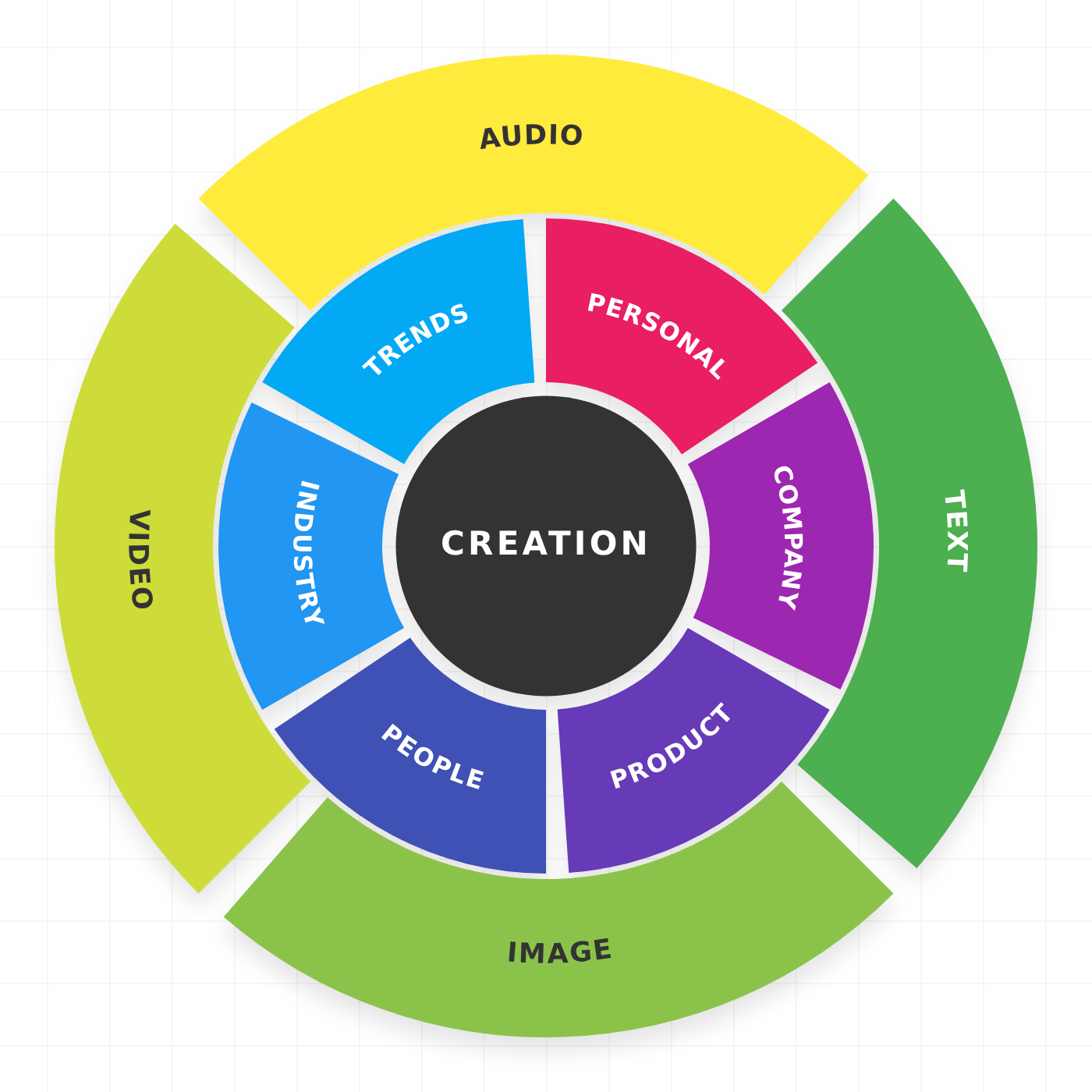
Here are the 6 places you should be mining for content:
1. Personal: What did you learn this week? What's your morning routine? What failure taught you a hard lesson? Your unique perspective is your only true competitive advantage.
2. Company: Take us behind the curtain. Show us the team lunch, the new hire, or the messy whiteboard from your strategy session. Humanize the logo.
3. Product: Don't just sell; educate. Show us a hidden feature. Explain why you built it that way. Solve a problem, don't just pitch a solution.
4. People: Shine a light on others. Share a customer success story. Shout out a mentor. When you celebrate others, they celebrate you back.
5. Industry: Be a thought leader. What's happening in the news? What's a common myth you disagree with? Where is the market going?
6. Trends: Ride the wave. Is there a viral topic everyone is talking about? How does it relate to your world? This is how you get visibility.
The 4 Formats of Delivery (How to Ship)
Once you have the idea, you need a vessel. This is the Outer Ring of the engine. Don't overcomplicate it—stick to the big four:
Text:
The foundation. Great for deep dives (like this newsletter!), LinkedIn posts, and SEO.
Image:
The scroll-stopper. Use this for emotional connection or data visualization.
Video:
The trust-builder. Nothing builds a bond faster than seeing your face and hearing your voice.
Audio:
The intimate companion. Perfect for long-form discussions where you want to be in your audience's ear. This is of course why I produce The UnNoticed Entrepreneur podcast.
The Bottom Line
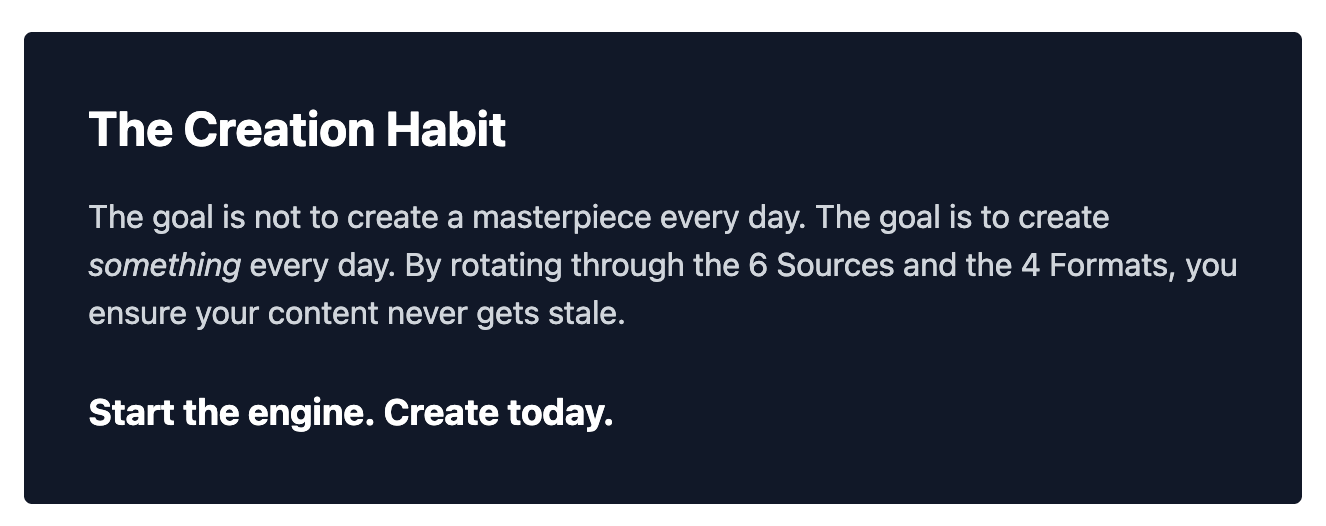
The goal isn't to create a masterpiece every day. The goal is to create something every day.
By rotating through these 6 sources and 4 formats, you ensure your content never gets stale. You stop wondering "what to post" and start building a library of assets that works for you 24/7.
So, here's my challenge to you this week: Pick one source. Pick one format. And ship one piece of content.
You can see the interactive chart and download the workbook here:


If you would like help with your content strategy, and even how to use AI to help you create content, then just book a meeting with me using the link below.
Book a call with Jim.